 Bee Habit
It takes a median of 66 days for a new daily habit to feel automatic, according to a 2009 study from University College London. The spread was wide, though: from 18 days to 254 days, depending on the person and how hard the habit was. Plan on about ten weeks, and do not panic if yours takes longer.
What the 66-day habit study measured
Phillippa Lally and her colleagues at UCL followed 96 volunteers for 12 weeks. Each person chose one new behavior, like eating a piece of fruit with lunch or running for 15 minutes before dinner, and reported every day whether they did it and how automatic it felt.
The researchers then looked for the point where automaticity stopped rising. For the average participant, that plateau arrived after 66 days. Simple habits, such as drinking a glass of water, got there faster. Demanding ones, like 50 sit-ups before breakfast, took longer. A few people never reached a plateau within the 12 weeks at all.
A 2024 review of 20 studies with 2,601 participants found the same slow timeline. Health habits usually took two to five months to form, and individual times ranged from 4 to 335 days.
Where the 21-day habit myth comes from
The popular "21 days to form a habit" figure traces back to Maxwell Maltz, a plastic surgeon who wrote Psycho-Cybernetics in 1960. He noticed that patients took at least about 21 days to get used to their new appearance. That observation was about adjusting to a change, and over the decades it got shortened into a rule for building habits. No study backs it up.
The myth does real harm. If you expect a habit to click in three weeks and it does not, it is easy to decide you are bad at habits and quit around day 25, well before most people would have reached automaticity.
Does missing a day reset habit formation?
No. In the UCL study, missing a single day did not meaningfully slow people down. What mattered was repeating the behavior in the same situation most days. That is good news for anyone who has ever lost a long streak to a cold, and it is the reason a missed day is worth shrugging off.
How to get through the first ten weeks
- Anchor the habit to a fixed cue, like "after I pour my coffee" or "when I get off the train".
- Start smaller than feels useful. Two push-ups done daily beat twenty done twice.
- Track it somewhere you look every day, so the gap between intention and action stays visible.
- Judge progress one month at a time. A good month with a few gaps is a success.
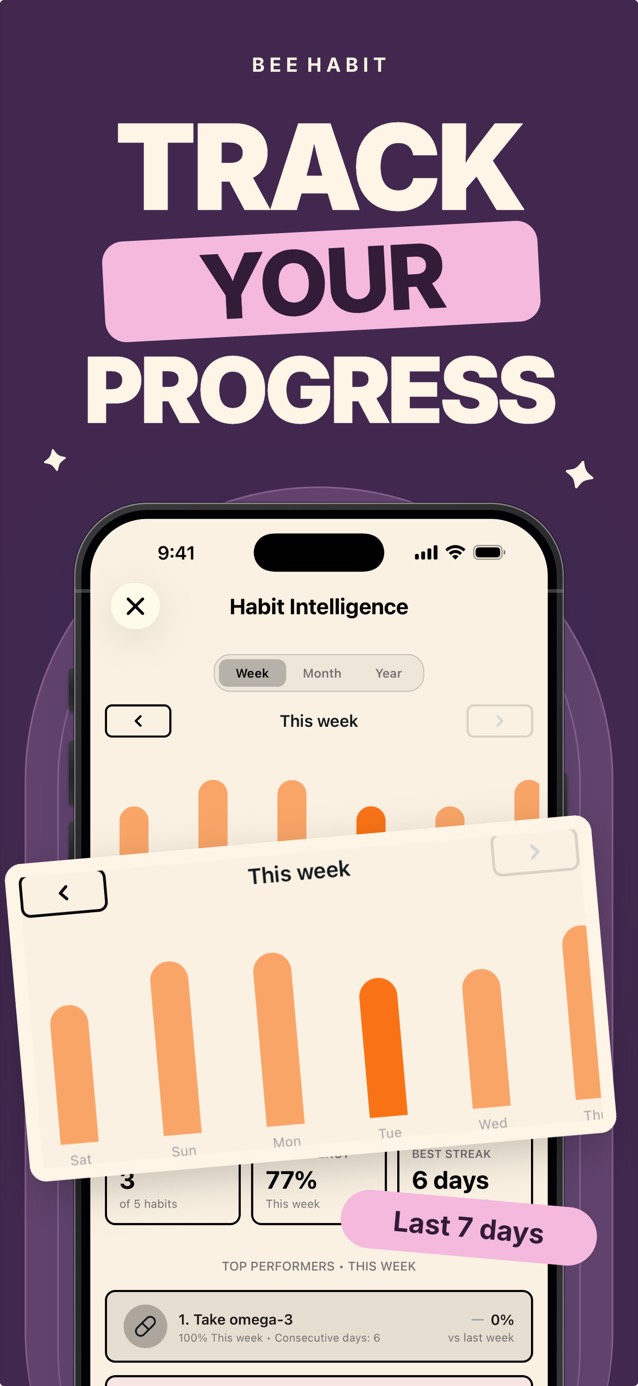
Ten weeks is 70 days, which is about ten rows on a habit grid. In Bee Habit you can watch those rows fill in with your chosen pattern, and the weekly and monthly charts show whether the habit is settling in or needs a smaller version.
Common questions
Is it 21, 30 or 66 days to form a habit?
The research supports about two months on average, with 66 days as the best-known median. There is no evidence for 21 days, and 30 days is a popular length for challenges with no study behind it.
Why do some habits form faster than others?
Simple actions with a clear cue, like drinking water with lunch, become automatic faster than effortful ones, like a hard workout. Doing the habit in the same place and at the same time also speeds things up.